
IT/OT Sales Enablement Academy
Your sellers know your product. Your buyers run a plant.
We know both sides of that gap. Between us we have worked in plants, labs, infrastructure and software. For years we were the people vendors were trying to sell to. We know what credibility looks like from the buyer’s chair. We also experienced enough challenges as vendor.
The IT/OT Sales Enablement Academy is how we pass those learnings on to your (pre-)sales team. We cover how manufacturers actually work, how the IT/OT stack fits together, why deals stall and where your product fits. Tailored to your needs, so we start from your problems.
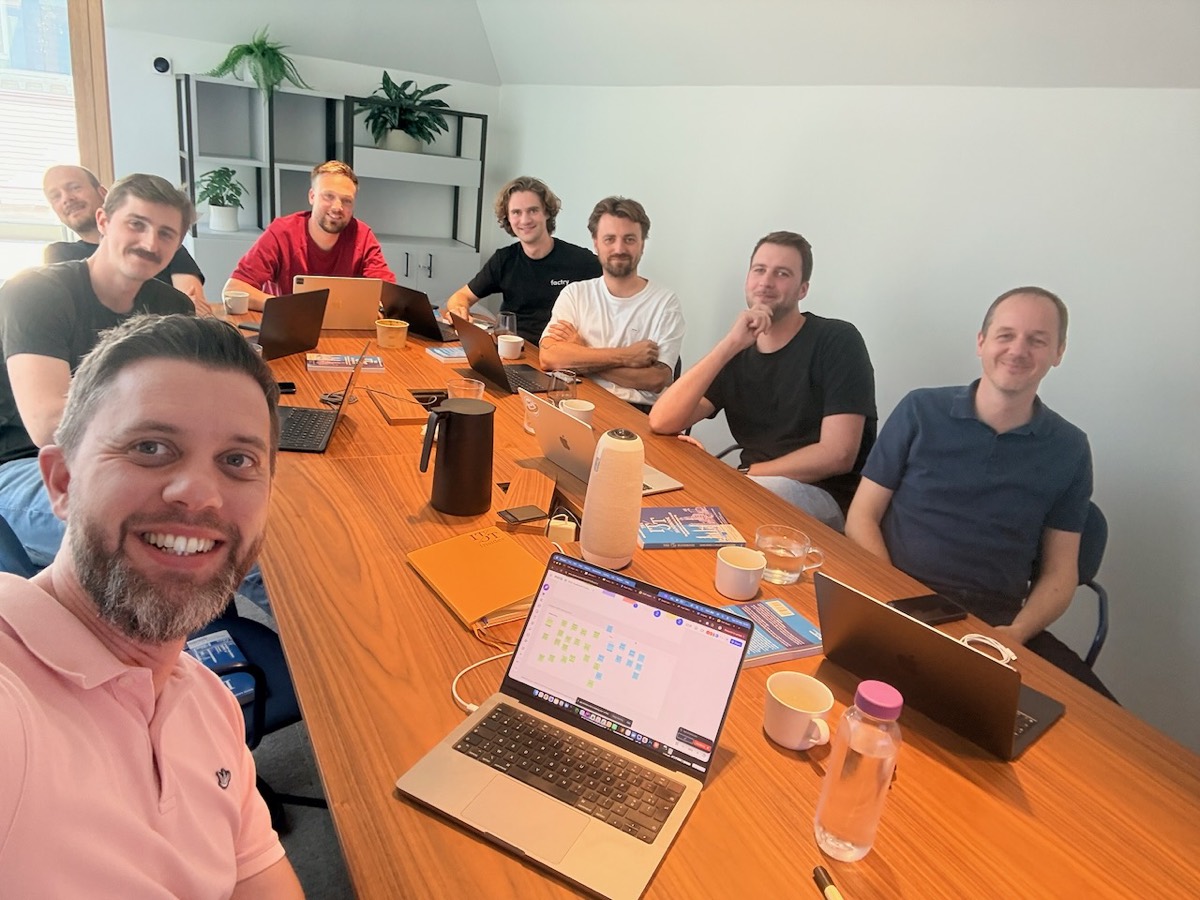
Delivered for sales organisations at Databricks, Litmus, Novotek, Factry and others.
Built by David Ariens and Willem van Lammeren, the team behind the IT/OT Insider and the IT/OT Academy.
Trusted by sales and pre-sales teams at technology vendors, distributors and system integrators:









- 100+
- professionals trained in our public IT/OT Academy cohorts
- 9.0 / 10
- average rating
- 200+
- learners through our private academies
- Since 2023
- frameworks refined in public, published in The IT/OT Handbook
We have been on both sides
David started as a data scientist in 2010 and went on to run industrial digitalisation and cyber security at BASF Antwerp. In 2022 he switched sides and started to sell Industrial DataOps solutions to manufacturers worldwide. Willem is a chemical engineer who moved between OT in logistics, labs, production and now AI in maintenance. He also worked at BASF and is now with Syensqo (prev. Solvay).
We have each lived the plant view and the IT view, and we have sat across the table from vendors and sat at the vendor's side.
Selling to operations takes more than a nicely formatted sales deck. You have to understand their world. That is what this Academy teaches: the concepts, the buyers and the stack, so your sellers are taken seriously from the first call.
Operations notices who understands the plant
We have sat on the buyer’s side of calls like this. Your seller is on a first call with a plant manager and an automation engineer. The seller says the data will simply flow from the shop floor to the cloud. The engineer hears a shortcut past the Purdue levels and a risk to a network that cannot go down. The seller calls the historian a database. The plant manager asks what happens to the line if the connection drops, and gets a product answer to an operations question.
The call ends politely. The follow-up goes unanswered.
Manufacturers rarely tell a vendor it lost credibility. They stop replying. In operations, credibility comes from using their words correctly: levels, historian, SCADA, MES, batch, downtime, UNS. Sellers who do that get a second meeting, and the right people in it.
It also decides what happens after the signature
Meet Patrick. He runs a production line and wants a better way to do his job. He finds a vendor, the pain is clear, and the plant manager signs the proof of concept within weeks. A hot inbound, a fast deal, a happy seller.
Then the tablets arrive. Patrick asks IT for wifi access. IT answers that cybersecurity regulations rule out passwords on the plant network. Patrick is told to file a ticket. The tablets are never switched on.
The seller sold to the plant’s goals: cost and speed. IT’s goals (security, supportability, standardisation) never entered the deal, so IT had no reason to say yes. The deployment landed in the gap between IT and operations, where nobody owns anything. The win looked good in the pipeline report. It never became a reference.
Understanding operations includes knowing who else has to say yes.
Five places a manufacturing deal goes wrong
Credibility gap. Sellers do not speak operations.
Plant and engineering buyers go quiet after the first call. New hires need months before they can lead a call on their own.
Concepts used loosely. Purdue, historian, SCADA, MES, DataOps and UNS get mixed up.
Technical buyers correct your seller in front of the room. Pre-sales spends calls translating.
Wrong buyer. The champion has no budget or no say.
Great discovery calls, no signature. Deals slip quarter after quarter.
The IT/OT gap. Security and IT enter late.
Proofs of concept that win and then stall on security review, network access or ownership. Site two restarts at zero.
Fuzzy position. Sellers cannot say where you fit next to the historian, SCADA, MES, cloud platform or integrator already in the account.
Long competitor comparisons, discounting, and deals lost to "we already have something".
We built the Academy around teaching you these five, always with a link back to your products and your challenges.
What you will see in the field
Your sellers will run better conversations in plants and in IT, and they will recognise early which deals will close and which will stall.
Taken seriously by operations
Your sellers use the right concepts in the right place: Purdue levels, historian versus SCADA versus MES, what a UNS is and what it is not. Plant and engineering buyers see someone who understands their world, and they agree to the second meeting.
Faster onboarding
New sellers learn the language and architecture of a plant in weeks. They stop shadowing for months before they can lead a first call.
The right buyer, earlier
Your team can name the economic, technical and user buyer in an account, and the coach who can guide the deal. Operations, OT, process engineering, IT, quality, supply chain and the innovation team each get a different conversation.
IT and security answered before they ask
Sellers arrive with answers to the questions that normally stall a proof of concept in review.
Pilots with a path to scale
Your team sells the route from site one to site ten, so the first deal becomes the first of many.
Better positioning
Sellers know where you overlap with other vendors, where you are part of the same ecosystem, and where you are not the right fit. They qualify out early and spend time where you win.
What your sellers take away
This is not a sales methodology course. Keep the one you use. We teach the domain knowledge those methods assume your sellers already have.
-
1
How operations works
Why a plant thinks in uptime, safety and batches. Why IT and OT rank confidentiality, integrity and availability in a different order. Why "we cannot risk shutting down production" is a real constraint, whatever it sounds like in a meeting.
-
2
The concepts every buyer assumes you know
Purdue and ISA-95. Historians, SCADA, MES and where each sits. DataOps. The Unified Namespace and what customers really mean when they ask for one. Depth adapts to your team and the questions they get in the field.
-
3
Frameworks they can use in a pitch
The Data Journey Model for roadmap studies and fit-gap conversations. The Industrial Data Platform Capability Map to show where you sit in the customer's landscape. Cooperation patterns that tell a seller how the customer is organised and how hard the deal will be.
-
4
Who to sell to
Buyer personas in a manufacturing account, what each one cares about, and what an economic, technical and user buyer each needs to hear. The CIO and COO disconnect, and how to sell into both without choosing a side.
-
5
What a manufacturer is really struggling with
Our architecture typicals from different industries. Your team works through the typical problems a manufacturer faces, then places your product in those architectures.
-
6
Your competitive landscape
We take apart the architecture diagrams of adjacent products and map the landscape. Where competitors offer something similar. Where they are part of the same ecosystem. Where your product has real gaps, such as legacy protocols, and how to be straight about them with a customer.
-
7
Your own messaging
Your team works through your pitch together, with us. They leave with sharper positioning, objection handling and a first-call structure they wrote themselves.
Built around your product, your accounts, your people
There is no fixed curriculum. We start with an intake and design the content with you.
Step 1
Intake
We talk to sales leadership, pre-sales and a few sellers. We learn where deals actually stall.
Step 2
Design
You get a proposal that mixes the building blocks below for your team and your timeline.
Step 3
Delivery
Live and interactive, with your own accounts and architectures on the whiteboard. No generic case studies.
Step 4
Afterwards
Your team keeps the materials and pre-reads for onboarding the next hires. Optional private advisory sessions let sellers bring us a live deal.
Example programme: OT software vendor
Session 1: IT/OT basics and positioning in the market. How IT and OT differ. Purdue and ISA-95 in 2026. The Unified Namespace, starting from the questions your own sellers get. MES, historian and SCADA and how they relate. The Data Journey Model and the Capability Map. Then your product placed in our architecture typicals, including a candid look at its weaknesses.
Session 2: Buyers. Economic, technical and user buyers. Objection handling for each. The CIO and COO disconnect. Project versus product reality: what a customer expects from implementation, and how that shapes your model. The role of the solution architect. Cooperation patterns and what they mean for your deal strategy.
Session 3: Pipeline Review. We meet again after your team has had time to apply the concepts in the field. Sellers bring a live account and the hardest questions they were asked. We discuss what they are facing, how they approached each buyer, what they asked and what came back, and where the concepts held up or fell short. We review active accounts together: who is in the buying centre, what is missing, where IT and security still have to enter, and what the next step should be. The session ends with sharper messaging and one concrete action per seller, which we follow up on afterwards.
Other building blocks: cybersecurity fundamentals for OT, a digital maturity framework, a management track on sponsorship and decision points, role-play on real deal friction, and our Sweet Harmony Treats case applied to your context.
Formats
Virtual
Several shorter sessions, one device per participant, interactive throughout.
On site
At your sales kickoff or team meeting, or any location you choose.
E-learning
Self-paced modules, delivered through your own LMS.
Combined
Most teams mix them.
Who it is for
- Account executives and sales directors who sell into manufacturing and need operations credibility.
- New hires who must ramp quickly into a domain none of them came from.
- Pre-sales and solution engineers who face the architecture, security and integration questions.
- Customer success who inherit the deployment and the gap between IT and operations.
- Channel and partner teams who sell your product alongside their own.
- Sales leaders who want one shared language across all of the above.
You do not need a manufacturing background. We start from where your team is.
Work we have done
Private engagements run under NDA, so we describe them without names.
A leading cloud data and AI platform
We worked with their sellers across the globe so they could speak with confidence to the operations and engineering stakeholders who decide whether an industrial data platform gets funded. Their sellers know IT inside out. Operations is a different room.
A newly funded OT software company
After a funding round they stood up a local sales team to take over from the founders. We helped the team find its footing fast: qualify a prospect in the first conversation, explain the technology without losing the room, and sound like they had done it for years.
A European distributor of OT software
Their sales and pre-sales teams were losing time in competitor comparisons that went nowhere. We gave them the tools to position against adjacent and overlapping vendors with confidence, and to build urgency without turning a three-month deal into a two-year project.
What people say
The Industrial Platform Capability Map referenced in the blog and put together by David Ariens and the team at The IT/OT Insider is a great framework for thinking about deploying an enterprise ready solution.
I recently attended the ITOT.Academy cohort with David Ariens and Willem van Lammeren. I can highly recommend this to anyone wanting learn more about better collaboration between IT and OT teams in the Manufacturing space.
Collaborating with engineers and automation experts on real-world challenges gave me fresh insights that directly shaped my recent talk on overcoming data silos and driving digital transformation.
We worked on a real-life use case of a company facing operational inefficiencies, which made the exercise feel relevant and hands-on.
Your sellers learn from people who have been the customer
David Ariens was industrial digitalisation director at BASF Antwerp until 2022. He started as a data scientist in 2010 and has spent his career on why digital projects in plants succeed or fail.
Willem van Lammeren is a chemical engineer who worked at BASF until 2022 and still works in the chemical industry. He has been on both sides of IT and OT, from production to ERP and middleware.
Our frameworks are public and tested: 120+ free articles, 70+ videos, and The IT/OT Handbook, published by IT Revolution.
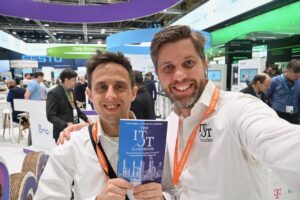
Your teachers: David and Willem
FAQ
We already have sales training. Why add this?
Do you teach our product?
Our sellers are already technical.
Will competitors sit in the room?
How long until we see a difference?
Does it work for a global team across time zones?
What happens when new people join next year?
What does it cost?
Can we start smaller?
Let’s talk about your sales team
Tell us who sells, what they sell, and where deals stall. We will tell you whether we can help, and what we would do.
Book a 30-minute scoping call with DavidOr write to academy@itotinsider.com
What to bring: your team size, the product, and one deal that stalled for reasons nobody could quite explain.
Tell us about your sales team
Who sells, what they sell, and where deals stall. We’ll tell you whether we can help, and what we would do.